Calculate Your Savings HERE
Boxes Created 1600000000
90000000 CO₂ Saved (lbs)
4518639.77 Trees Saved

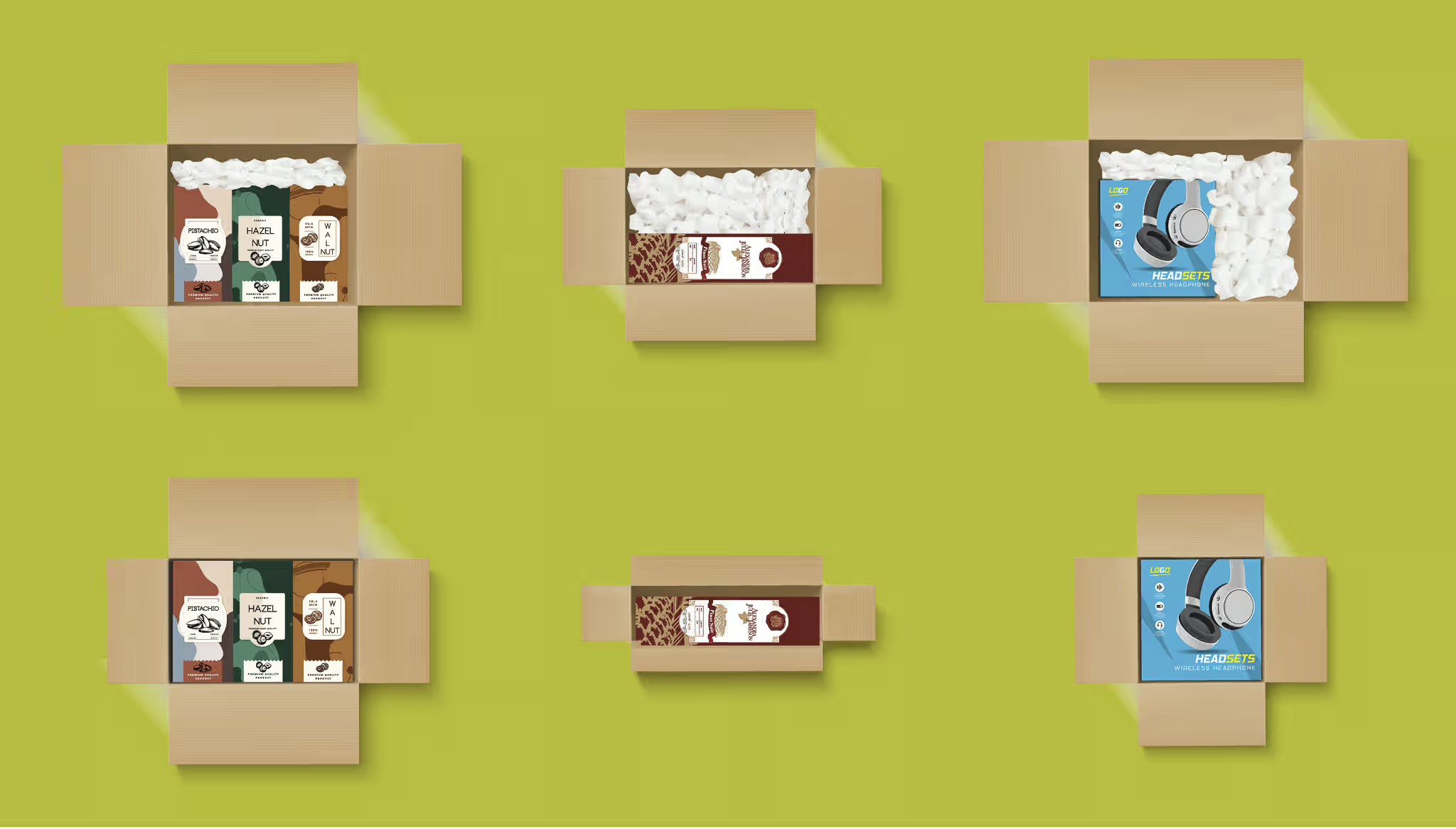

The world of distribution is undergoing a seismic transformation, driven by major shifts in consumer expectations and buying behavior, technological advancements, and the relentless growth of e-commerce.
Speed and convenience have become table stakes. Consumers now consider brand values, business practices, and experience quality when making purchase decisions, and they’re more than just nice-to-haves. A 2024 PwC survey found that consumers are willing to pay 9.7% more for sustainably produced or sourced goods. Even during times of inflation and market volatility, consumers are willing to spend more with companies who go the extra mile.
That point becomes even more challenging for companies stocking a wide variety of product types and sizes. Standardized boxes and manual workflows were once the backbone of shipping operations. However, these legacy processes often rely on manual workflows and rigid systems that slow operations, increase labor costs, and limit scalability, ultimately reducing profitability and hindering growth. To stay competitive, companies need to make versatility a cornerstone of their packaging strategy.
Packaging has never been a one-size-fits-all approach. What works well for one product type doesn’t work well for others. If you’re shipping products with a wide range of material and sizes, stock boxes result in improperly sized boxes for each shipment. That means excess DIM weight charges, and based on the latest DIM rounding rule implemented by UPS and Fedex, that problem is only growing worse.
If you’re shipping products with a wide variety of weights and/or types, it’s impossible to find one packaging approach that works equally well for all of them.
For example, a highly automated packaging system might work perfectly for a retailer shipping things like gardening gloves and beauty products. But what if you need to ship something oversized like a hockey stick or a shovel? What if you ship breakable items like wine glasses? Or something really bulky like furniture? The greater the variety of products and the range of dimensions in your inventory, the more critical versatility becomes in your packaging solution. Accurate sizing ensures efficiency, reduces waste, and protects your products during transit.
When an item is shipped in a large box filled with unnecessary padding, it doesn’t just result in higher costs – it creates a perception of waste during the unboxing experience. And when an item is under-protected or poorly packed, it is more likely to be damaged in transit, resulting in returns, replacements, and disappointed customers.
These inefficiencies not only erode profit margins but also compromise customer satisfaction and brand reputation. In a world where reviews and social media can amplify negative experiences instantly, packaging mistakes are costly. Moreover, as transportation costs rise and sustainability becomes a central concern, the waste generated by outdated packaging processes is no longer acceptable – both financially and environmentally. Companies are under pressure to find smarter, more adaptive solutions that can address the full complexity of their product mix and order profiles.
Against this backdrop, we’ve seen a sharp rise in the need for more versatility from packaging solutions. To stay competitive, companies need systems and processes capable of right-sizing and customizing packaging for each unique item or order. This adaptability delivers several key advantages that are critical to success in today’s market.
Right-sizing minimizes material waste. By tailoring packaging to the exact dimensions and protection needs of each product, companies use less cardboard and void fill. This not only reduces costs but also supports sustainability goals by cutting down on excess and non-recyclable materials. Optimized packaging also enables more efficient use of shipping space, allowing carriers to transport more packages per trip and reducing the overall carbon footprint of deliveries.
Right-sized packaging solutions also help optimize shipping volumes and reduce dimensional weight charges. Shipping carriers increasingly use dimensional weight pricing, which considers both the size and weight of a package. Oversized or poorly packed boxes result in higher fees, even if the actual product is lightweight. Right-sized packaging ensures that companies pay only for the space and weight they actually use, avoiding unnecessary expenses and improving profitability.
Perhaps most importantly, versatile packaging approaches enable rapid pivots as product lines evolve. In today’s fast-paced retail environment, companies must frequently introduce new SKUs, respond to seasonal fluctuations, or launch limited-time promotions. Flexible packaging systems allow organizations to make these changes without overhauling their entire packaging infrastructure. Automated solutions and modular designs can be quickly reconfigured to accommodate new products or order profiles, ensuring that operations remain efficient and responsive.
Versatility also aligns with growing demands for sustainability. Right-sized packaging means less excess material, fewer filler components, and reduced shipping emissions—outcomes that matter to environmentally conscious consumers and regulators alike. Companies that demonstrate sustainability in their operations are better positioned to attract customers, meet regulatory requirements, and strengthen brand loyalty. In many cases, packaging innovations are at the forefront of broader sustainability initiatives, helping companies reduce their environmental impact while delivering tangible cost savings.
Industry leaders are prioritizing innovative packaging strategies that deliver agility, resilience, and competitive differentiation. The days of one-size-fits-all packaging processes are giving way to dynamic, data-driven systems that can respond in real time to order complexity and changing market conditions. Packaging automation, right-sized packaging, and reporting and optimization tools are just a few examples of how organizations are modernizing their approaches.
Packaging automation refers to the use of advanced machinery, robotics, and software to streamline and optimize the process of preparing products for shipment. These technologies enable the automatic handling of tasks such as filling, sealing, labeling, wrapping, and palletizing, reducing the need for manual labor and minimizing human error. Automation systems can be customized to handle a variety of product sizes, shapes, and packaging materials, improving efficiency, consistency, and throughput in manufacturing and distribution environments. By integrating sensors and data analytics, packaging automation also enhances quality control and enables real-time monitoring, leading to cost savings and increased productivity for companies.
Right-sized packaging is a process in which packaging is carefully tailored to fit the exact dimensions and needs of a product, minimizing excess space and material use. This approach reduces wasted materials, lowers shipping costs, and enhances sustainability by decreasing the volume of packaging. Right-sized packaging not only protects products more effectively, preventing damage during transit, but also improves the customer unboxing experience. Advanced technologies such as automated packaging systems, warehouse management systems, and 3D scanning make it possible to efficiently produce custom-fit packaging on demand, supporting both environmental goals and operational efficiency.
Data-driven optimization is another area where packaging innovation is making a major difference. Advanced analytics can identify patterns in order profiles, shipping costs, and packaging waste, allowing companies to fine-tune their processes for maximum efficiency. Machine learning algorithms can predict which packaging configurations will minimize damage, reduce costs, and enhance the customer experience. By leveraging data, companies can continuously improve their packaging strategies, adapting to new trends and challenges as they emerge.
In recent years, we’ve witnessed time and again how important versatility is in the supply chain. The ability to adapt quickly to market changes—such as sudden demand spikes, new product launches, or supply chain disruptions—has become a massive strategic advantage. Versatile packaging solutions enable this responsiveness, ensuring companies can scale or shift focus without costly delays or errors. For example, during peak seasons like the holidays, automated packaging systems can be adjusted to handle higher volumes or different product and order mixes, maintaining speed and accuracy even under pressure.
Some leading companies are also experimenting with sustainable materials and circular packaging models. These initiatives involve using recycled or biodegradable materials, designing packaging for reuse, or implementing take-back programs that encourage customers to return packaging for recycling. While these approaches require new thinking and investment, they offer the potential for significant environmental and brand benefits.
Ultimately, investing in a versatile packaging solution is about more than operational efficiency—it’s about creating a strategic advantage that drives growth and customer satisfaction. Companies that embrace adaptability can fulfill orders faster and with greater accuracy, control shipping costs, and provide a better unboxing experience for customers. This not only drives repeat business but also enhances brand reputation in a crowded and competitive marketplace.
A memorable unboxing experience can turn a first-time buyer into a loyal customer. Thoughtfully designed packaging that fits the product perfectly, protects it during transit, and reflects the brand’s values makes a powerful impression. In contrast, poorly packed or wasteful packaging can damage both the product and the relationship with the customer.
Versatile approaches also support broader business goals, including market expansion and innovation. As companies enter new markets or launch new product lines, the ability to adapt packaging quickly ensures that operations remain agile and scalable. This versatility reduces risk, lowers costs, and helps companies seize new opportunities as they arise.
As the landscape continues to evolve, the question for business leaders is no longer whether to pursue versatility in packaging, but how quickly they can make it a reality. The future belongs to organizations that can seamlessly accommodate the full spectrum of product sizes and shapes, respond to shifting demand, and deliver on the promise of sustainability. Now is the time to rethink packaging strategies, invest in versatile, future-proof solutions, and unlock new opportunities for growth, efficiency, and customer satisfaction.
The shift toward more modern packaging solutions is not a passing trend but a fundamental transformation in how companies operate. Those who act quickly and strategically will gain a significant advantage, positioning themselves to lead in a world where adaptability, efficiency, and sustainability are the keys to success. By embracing right-sized packaging on demand, organizations can build stronger customer relationships through better experiences, improve operational resilience, and deliver lasting value to their stakeholders.
Ready to rethink your packaging strategy? Contact Packsize today to start your journey towards sustainable packaging excellence.